
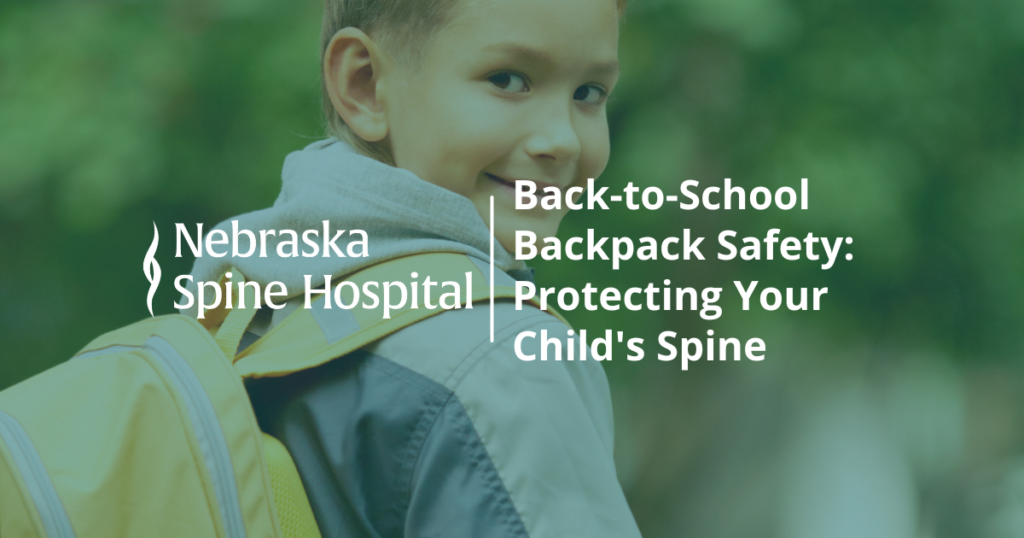
As August winds down, backpacks are being packed and the school year is getting underway. For many children, that backpack goes on every single morning and comes off every afternoon — five days a week, for the better part of a year. What goes into that bag, how it’s worn, and whether it fits properly all have a real and cumulative effect on your child’s spine. Backpack-related back pain in children is more common than many parents realize, and the good news is that it’s largely preventable with a few straightforward adjustments.
The Weight Problem
The most significant backpack-related risk for children’s spines is simply carrying too much weight. Most spine and pediatric health organizations recommend that a child’s loaded backpack weigh no more than 10 to 15 percent of their body weight. In practice, many students carry significantly more than this — especially at the middle and high school level where textbooks, binders, and supplies add up quickly. Excess weight forces the child to compensate by leaning forward, which shifts the natural curve of the spine and places sustained pressure on the vertebrae and surrounding muscles. Over a full school year, this pattern contributes to chronic back and neck discomfort.
How the Backpack Is Worn Matters as Much as What’s in It
A properly loaded bag worn incorrectly still creates problems. Both shoulder straps should always be used — carrying a backpack on one shoulder shifts the load entirely to one side of the body, creating muscular imbalance and lateral spinal strain. The straps should be adjusted so the bottom of the bag sits no lower than the top of the hips, keeping the weight centered and close to the body. Waist and chest straps, when available, help distribute the load more evenly and reduce the pull on the shoulders and upper back. Many children wear their backpacks loosely with straps hanging low — a habit worth correcting early.
Choosing the Right Bag
Not all backpacks are created equal from a spine health perspective. When selecting a bag, look for wide, padded shoulder straps that don’t dig into the shoulders, a padded back panel that provides cushioning against the spine, and a design with multiple compartments to allow weight to be distributed evenly. Bags that are too large for the child’s frame encourage overpacking and make proper positioning more difficult. Rolling backpacks can be a useful alternative for students who consistently carry heavy loads, though they present their own challenges in schools with stairs or crowded hallways.
Start the Conversation Early
Children don’t always connect their back or shoulder pain to their backpack — they may not mention discomfort at all unless asked. Making backpack habits part of a back-to-school conversation each year, checking the weight of the bag regularly, and watching for signs like posture changes, complaints of back or shoulder pain, or tingling in the arms helps catch issues before they become ongoing problems. A few simple habits established at the start of the school year can protect your child’s spine throughout it.
For pediatric spine health resources, visit the Pediatric Orthopaedic Society of North America (POSNA): https://www.posna.org/