
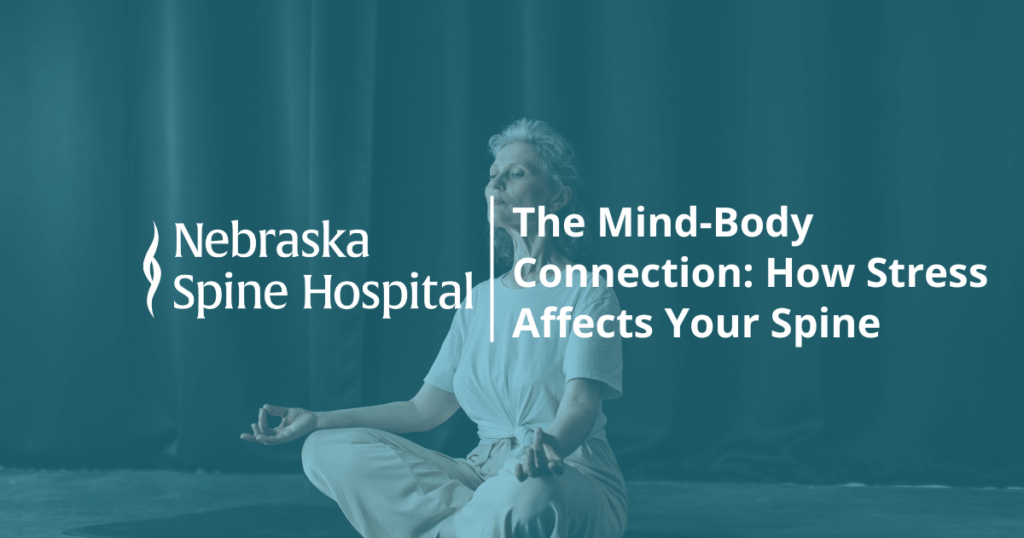
December is filled with celebrations, gatherings, and year-end responsibilities, and while much of it is joyful, it can also be stressful. That’s why understanding the mind-body connection and how stress affects your spine is so important. Stress doesn’t just impact your mood, it can have a real, physical effect on your back.
Here’s how managing it can help you protect your spine.
Stress Can Create Muscle Tension
When you’re stressed, your body goes into “protective mode.” Muscles in your neck, shoulders, and back tighten, sometimes without you noticing. Over time, that tension can lead to stiffness, headaches, and increased back pain.
Relaxation techniques like deep breathing, stretching, or a warm shower can help release that built-up pressure.
Your Posture Reflects Your Emotions
Stress often shows up in how we sit or stand. Having rounded shoulders, a forward head position, or a slumped lower back can place extra strain on your spine. Throughout the day, pause and check in with your posture. A small reset can make a big difference!
Sleep Quality Matters
Stress can interfere with restful sleep, which is essential for muscle recovery and spinal health. Creating a calming bedtime routine like dimming lights, gentle stretching, and limiting screens can help your body unwind.
Mindful Movement Supports Mindful Living
Gentle activities like walking, yoga, and meditation can help lower stress levels and keep your spine mobile. Even a five-minute mindful break can improve how your back feels.
Reach Out When You Need Support
Managing stress is easier when you feel supported. Lean on your community and prioritize your mental well-being as much as your physical health.